
Residential Development
Category
Real Estate
Date
Author
Dinis Francisco
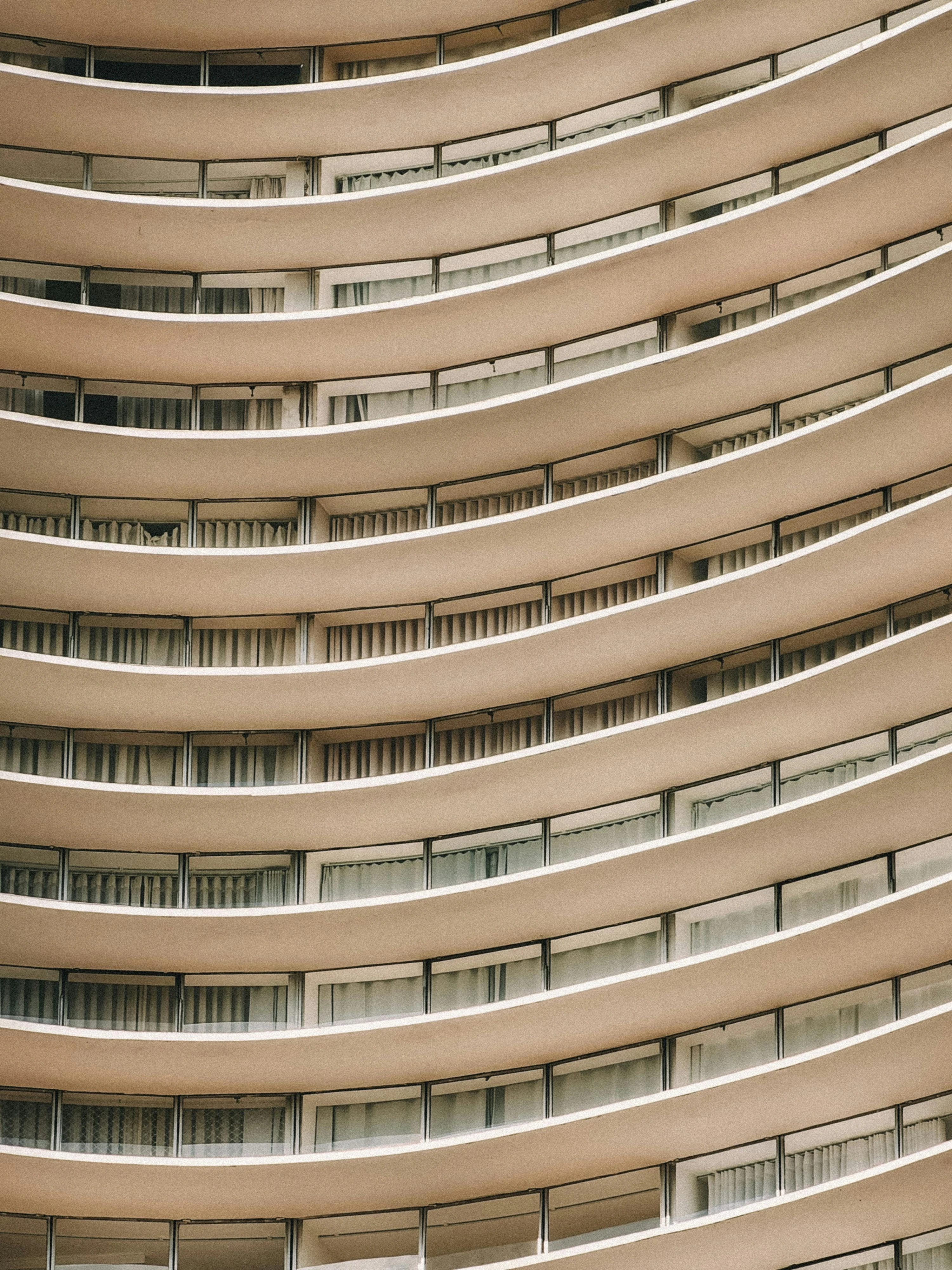
Real estate rarely lacks quality. In most cases, the architecture is considered, the layouts are efficient, and the materials are aligned with the market. Yet, when these projects are introduced, they often feel indistinguishable from one another. This is not a problem of design. It is a problem of perception.
Over time, this creates a market where everything feels interchangeable.
This repetition does not happen by accident. It is the result of established workflows, tight timelines and the need to produce materials efficiently. Certain visual approaches become standard because they are safe. Certain tones of voice are reused because they are expected. The industry, in many ways, optimises for speed and clarity of output, but not always for clarity of identity.
The outcome is a kind of visual neutrality.
Projects are presented in a way that avoids risk, but also avoids distinction. They are technically correct, but emotionally distant. They communicate what the project is, but not why it matters.
When a project enters the market without a clear identity, it does not immediately fail. Instead, it competes quietly. It blends into the surrounding landscape of similar developments, making it harder for potential buyers to form a strong impression.
This has a direct impact on perception.
In real estate, perception is not an abstract layer. It shapes how value is interpreted. A project that feels defined and intentional is often perceived as more valuable than one that feels generic, even if their technical qualities are comparable.
When communication lacks specificity, that perceived value begins to erode.
Buyers are left to compare projects based on surface-level attributes such as price, location or size, rather than understanding what makes one option meaningfully different from another. This shifts the conversation away from identity and towards metrics, which is rarely where long-term value is built.
At the same time, generic communication increases hesitation.
When everything looks similar, decision-making becomes slower. People take longer to understand what they are seeing, and in many cases, they disengage before forming a clear opinion. The project does not create enough tension to hold attention.
And attention, in today’s market, is already limited.
There is a common assumption that standing out requires adding more layers. More visuals, more information, more features. In reality, the opposite is often true.
Differentiation comes from reduction and clarity.
A project becomes distinct when it is able to communicate a clear idea of what it represents. This idea does not need to be complex, but it needs to be consistent. It needs to guide every decision, from how images are composed to how language is structured.
Without this central idea, communication becomes reactive.
Different elements are produced independently, each solving a specific need, but without contributing to a larger narrative. Over time, this leads to fragmentation, where the project is understood in pieces rather than as a whole.
Clarity removes this fragmentation.
When a project is built around a strong conceptual direction, every output begins to reinforce the same perception. Images are no longer just descriptive. They become part of a story. The website is no longer just informative. It becomes an extension of the same idea.
This alignment creates coherence, and coherence is what makes a project feel intentional.
Narrative is often misunderstood in real estate communication. It is sometimes treated as an additional layer, something that sits on top of the visuals. In reality, narrative is the structure that connects everything.
It defines how a project is introduced, how it unfolds and how it is remembered.
A strong narrative does not exaggerate or invent qualities that do not exist. It clarifies what is already there. It identifies what makes the project distinct and builds a consistent way of expressing that distinction across all touchpoints.
This is particularly important in early stages, when the project does not yet exist physically.
At that point, perception is the only experience available.
If that perception is vague or inconsistent, the project struggles to establish itself. If it is clear and coherent, the project begins to exist in the mind of the audience before it exists in reality.
This is where differentiation truly happens.
Breaking the cycle of repetition in real estate does not require reinventing architecture. It requires rethinking how projects are interpreted and communicated.
It starts with asking different questions.
Instead of focusing only on what needs to be shown, the focus shifts to what needs to be understood. Instead of producing assets, the goal becomes building a perception.
What makes this project distinct within its context
What kind of life does it suggest
What should people feel when they first encounter it
These questions create direction.
From that direction, a system can be built. A system where image, film, identity and digital presence are not isolated outputs, but parts of the same structure. Each element reinforces the same idea, creating consistency across every interaction.
This consistency is what allows a project to stand out without relying on exaggeration.
It feels clear. It feels intentional. It feels different, even in a crowded market.
Most real estate does not suffer from a lack of quality. It suffers from a lack of clarity in how that quality is communicated.
When projects are presented through repetitive and generic approaches, they lose their ability to differentiate, regardless of their architectural strength. Over time, this weakens perception and reduces the potential value they could achieve.
Breaking this pattern is not about doing more. It is about defining a clear idea and ensuring that every element of communication supports it.
Because in the end, people are not choosing between identical products.
They are choosing between perceptions.
And the projects that are understood the fastest, and the clearest, are the ones that stay.

Dinis Francisco
Creative Director, Be Tale
Share this post

